
Grant Stories
Local students formed nonprofit to increase affordable access to healthcare
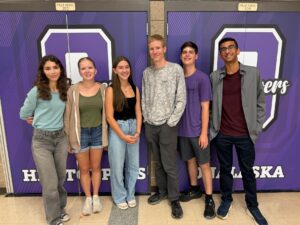
High school students (l-r) Eva McClung, Josephine Duckworth, Caroline Stanton, Zachary Hamman, Grant Hughes, and Ali Abidi formed a nonprofit organization to expand access to affordable healthcare.
Six local high school students returned to class this fall with an unusual answer to the familiar question of how they spent their summer: They ran a nonprofit they created to help people find affordable healthcare. With support from a $2,850 grant from La Crosse Area Community Foundation, the students behind SEHAT Inc. spent the summer preparing educational programs, multilingual resources, and community outreach across La Crosse County.
No teacher assigned the project.
The students identified a problem in their community, assembled a team, and learned what it takes to operate a nonprofit organization. Their work has taken them well beyond a typical service project, from establishing a 501(c)(3) organization to developing a mobile app designed to help people find free and lower-cost care.
SEHAT — short for Securing Equitable Healthcare Access Together — was founded in late 2024 by Onalaska High School student Ali Abidi. Its six-member team also includes Josephine Duckworth, Zachary Hamman, Grant Hughes, and Eva McClung from Onalaska High School and Caroline Stanton from Logan High School.
Abidi began exploring healthcare access after observing the barriers people encountered in Pakistan, where his family is from. That experience prompted him to consider similar challenges closer to home, including cost, inadequate insurance, transportation, language differences, and uncertainty about where to find affordable services.
“If you notice a problem that you think you can do something about, I think it is a responsibility that you should do something about it,” Abidi said. “In the end, helping people just makes the world a better place. So why not do it?”
The foundation grant is helping SEHAT present community seminars focused on health equity and healthcare resources. The students are also distributing multilingual resource guides through libraries, schools, community centers, YMCAs and other organizations and promoting their app, ApolloHealth, and other affordable care resources throughout La Crosse County.
The project began June 15, giving the students a full summer of planning, outreach, and preparation before they returned to their own classrooms. Their work will continue through the end of the year.
“What stands out is that these students didn’t wait for someone else to take the lead,” said Lauren Journot, impact director at La Crosse Area Community Foundation. “They recognized a need, brought people together, and built an organization to address it — all while balancing the responsibilities that come with being high school students. Their work shows that young people don’t have to wait until someday to make a meaningful difference in their community.”
The need they identified is well documented. The 2024 Compass Now report found that 36% of La Crosse County respondents had encountered at least one obstacle to obtaining healthcare. Those obstacles included cost, inadequate health coverage, difficulty getting appointments, transportation, childcare, and language barriers. More than one-third also rated their ability to pay for healthcare as fair or poor.
With each project, Abidi said, the students are learning how to work as a team and respond effectively to community needs.
“The most important thing I’ve learned is how to be an effective leader by taking initiative to identify and address problems affecting my community and beyond,” he said.
For more information about SEHAT, visit sehatnonprofit.org.