
Grant Stories
New teen support group fills critical gap for abuse survivors in La Crosse area
La Crosse Area Community Foundation grant supports new Family & Children’s Center program
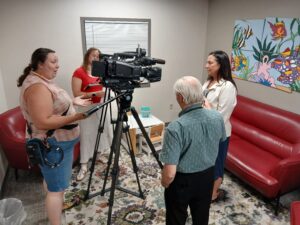
Family & Children’s Center’s Heidi Swedburg announces new teen group for abuse survivors. The much-needed program was funded through a grant from La Crosse Area Community Foundation.
A new support group for teens who have experienced abuse launched in La Crosse this month, creating a resource that local families, schools, therapists, and youth advocates have long said is needed. The program is supported by a $64,680 grant from La Crosse Area Community Foundation.
The Teen Support Group, offered through Family & Children’s Center‘s Stepping Stones Children’s Advocacy Center, provides a safe, supportive environment for youth ages 13 to 18 who have experienced abuse. Participants will meet weekly to connect with peers, learn coping skills, build healthy relationships, and gain a better understanding of resources available to help them heal.
Increasing incidents of teen abuse
According to the 2023 La Crosse County Youth Risk Behavior Survey, 10% of local high school students reported being forced to do something sexual, and 7% reported having been raped. At the same time, Stepping Stones staff have also seen increasing concerns involving dating violence, trafficking, and sextortion. In 2025 alone, Stepping Stones conducted 93 interviews with teens regarding suspected abuse.
While counseling and other mental health services exist in the region, Family & Children’s Center staff, school officials, therapists, and parents have repeatedly identified the need for a peer support group specifically for teens who have experienced abuse.
“This is something we’ve been hearing about for years,” said Tita Yutuc of Family & Children’s Center. “Teens have told us they want to meet others who understand what they’re going through. Parents have asked for it. Therapists have asked for it. The need has been there, but the resource hasn’t.”
Yutuc said many young people who experience abuse struggle with feelings of shame, isolation, or fear of retaliation, making it difficult to seek help.
Weekly peer support reminds survivors they’re not alone
“When a teen realizes they’re not the only one, something changes,” Yutuc said. “They begin to understand that what happened to them does not define them. They gain coping skills, confidence, and a sense of belonging. Healing happens faster when people don’t have to do it alone.”
The weekly support group is facilitated by trained mental health professionals using trauma-informed practices. In addition to peer support, participants will learn about topics such as healthy relationships, abuse prevention, emotional regulation, self-esteem, and navigating the legal system. Guest speakers from community organizations will help connect youth with additional resources and trusted adults.
The support group also introduces participants to trusted adults and organizations that can help them throughout their recovery journey. Guest speakers from law enforcement, social services, public health organizations, and other community partners will regularly participate in sessions.
Benefits for the wider community
La Crosse Area Community Foundation expects the program to benefit not only participating teens but also the broader community.
“When young people have the support they need to heal, the benefits ripple throughout the community,” said Megan Pierce, donor services director for the La Crosse Area Community Foundation. “Stronger mental health, stronger relationships, and stronger support systems help create healthier families, healthier schools, and a healthier community. That’s why investing in programs like this is so important.”
For Family & Children’s Center, the group represents another step in its mission to provide a continuum of care for abuse victims and their families.
For the teens who attended that first meeting, however, the significance may be simpler. For the first time, they were in a room with people who understood. And for many, that’s where healing begins.