
Good Works
ADRC ready to help with variety of challenges
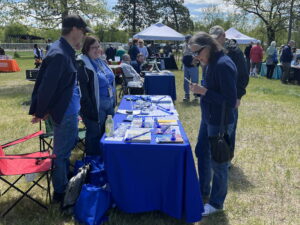
Alex Wieser and Jade Butler (l-r) share information about services available at the Aging and Disability Resource Center with community members at this year’s Community Picnic in Recognition of Older Americans Month at Veterans Memorial Park in West Salem.
Life doesn’t come with a roadmap for aging, living with disability or caregiving. When unexpected challenges arise, knowing where to turn can be just as important as finding the right solution.
For older adults, people with disabilities and the family members who support them, the Aging and Disability Resource Center of La Crosse County helps make that first step a little easier. Whether someone is planning for the future, navigating a new diagnosis or simply trying to understand what resources are available, Alex Wieser, an options counselor with the ADRC of La Crosse County, helps community members find their way by connecting them with information, services and support.
How does your work help people access services or maintain independence in the community?
Every day is a little different, but it always starts with helping people find answers. We receive referrals from individuals, families and community partners, and we also hear directly from people who call or stop by the ADRC looking for information or support.
From there, we help people in whatever ways work best for them. Sometimes that means answering questions over the phone. Other times, it means visiting someone at home, in a nursing home or in an assisted living facility to better understand their situation, assess their needs and determine whether they may qualify for public benefits or services.
One of the most important parts of my job is helping individuals and their families through the process. We help them understand their options, complete applications, connect with services and follow up to make sure they’re getting the support they need. It can feel overwhelming to navigate these systems alone, so we’re here to make the process a little easier and help people maintain as much independence as possible.
In what ways does the Aging and Disability Resource Center La Crosse County help connect individuals?
First, the ADRC of La Crosse County helps to facilitate an exploration of a person’s needs. This occurs over the phone or in person. We try to understand what kinds of information or services the individual or family is looking for. Then, the ADRC provides information, assistance, and referrals for relevant services.
Sometimes the ADRC can provide information and assistance to equip the individual and address the question or concern directly. At other times, we need the expertise of a partnering agency. If an individual is unable to access these services on their own, we can assist them in contacting the appropriate agency or service.
These may include public benefits, supportive home care, transportation and food options, housing resources, support groups, community-based educational events, and specialized agencies offering adaptive equipment, health and wellness, employment, legal, and financial services. Depending on the situation, we often follow up with the individual to ensure their needs have been met.
How does the ADRC collaborate with community partners?
The ADRC maintains an extensive “Resource Guide” with up-to-date information on services offered by community partners, including private businesses and non-profits. We publish a monthly newsletter called the “Senior Life,” highlighting community events, programs and resources. We also publish specialty newsletters focused on dementia and brain health and caregiver supports.
These newsletters include several community-based opportunities for relevant information and social connection, oftentimes led by community partners. We partner with other La Crosse County agencies to ensure easy access to county services, oftentimes personally assisting with contacting the appropriate agency.
We participate in community outreach events, often partnering with community agencies. These events are often held in partnership with other agencies and can focus on health and wellness; housing and community advocacy; youth transitioning into adulthood; understanding Medicare and Social Security; educational and support groups focused on dementia, brain health, and caregiving; and more.