
Blog
Transfer of Wealth: An Opportunity for Professional Advisors
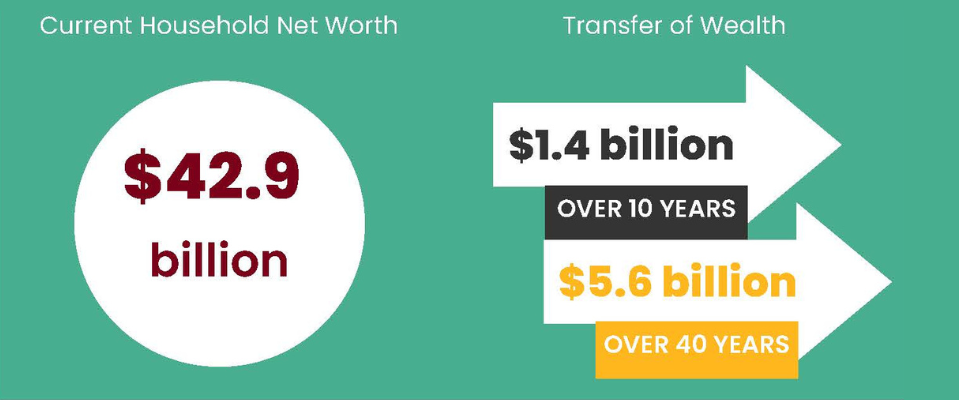
Last year, La Crosse Area Community Foundation partnered with several Wisconsin community foundations and the University of Minnesota Extension’s Department of Community Development to analyze the historic transfer of wealth expected in La Crosse County over the coming decades. The findings point to one of the most significant financial planning opportunities many advisors will see during their careers.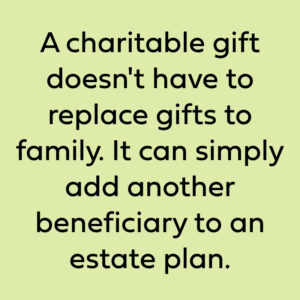
The numbers are hard to ignore.
- $42.9 billion in current household net worth in La Crosse County.
- $1.4 billion expected to transfer between generations over the next 10 years.
- $5.6 billion expected to transfer over the next 40 years.
- If just 1% of that wealth included charitable gifts, local nonprofits could receive $14.4 million over the next decade.
- At 5%, that grows to nearly $72 million.
Why this matters to advisors
The wealth is already here. The question is whether it remains invested in the future of the community where your clients built their businesses, raised their families, and created their wealth.
Many clients intend to support charitable causes but never discuss those goals during wealth or estate planning. As a result, charitable giving often becomes an afterthought — or never happens at all.
A simple conversation can change that.
For many families, leaving 1% to 5% of an estate to charitable purposes has little impact on heirs’ inheritances but can create a permanent source of funding for organizations that strengthen the community for generations.
One way to frame the discussion is to ask clients whether they’d like to add one more heir to their estate plan: the La Crosse community itself.
Questions advisors can ask clients
Charitable intent does not always surface unless an advisor asks. A few simple questions can help clients connect their wealth plans with their values:
- Are there local organizations or causes that have been meaningful to your family?
- Would you like part of your estate to continue supporting the community after your lifetime?
- Have you considered naming charitable causes as beneficiaries alongside family members?
- If taxes were not the only consideration, what kind of legacy would you want your wealth to create?
When to introduce charitable planning
Charitable planning can be especially relevant during estate plan reviews, business succession planning, retirement income planning, year-end tax planning, IRA beneficiary updates, or conversations about appreciated assets. Tools such as donor-advised funds, charitable bequests, beneficiary designations, qualified charitable distributions from IRAs, and charitable trusts can help translate a client’s intentions into a practical plan.
A growing expectation of comprehensive planning
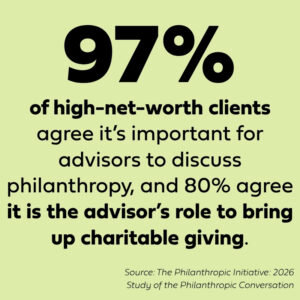
Today’s clients increasingly expect advisors to discuss more than taxes and investment returns. They want guidance on legacy, family values, charitable goals, and the long-term impact of their wealth.
Incorporating charitable planning into those conversations helps ensure clients’ financial plans reflect what matters most to them — not just during their lifetime, but long after. It can also strengthen advisor-client relationships by deepening discovery, broadening the planning conversation, and demonstrating a commitment to comprehensive, values-based advice.
When philanthropy is part of the conversation, La Crosse Area Community Foundation can serve as an extension of your advisory team. We help advisors explore charitable giving options that align with clients’ financial, tax, and legacy objectives while creating lasting benefit for our community and a meaningful legacy for your clients.
Before your next estate, retirement, or business succession conversation, consider inviting us in as a resource. Together, we can help clients turn charitable intent into lasting local impact.