Hmong center serves many roles for community
May 18, 2026
| By La Crosse Area Community Foundation |
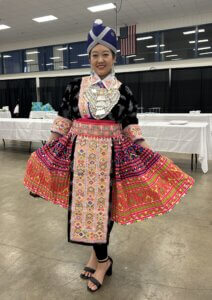
Valerie Hang wears traditional Hmong attire. She is part of the network of volunteers who quietly work behind the scenes to sustain the organization’s programs and cultural traditions.
For many families in the Coulee Region, the Hmong Cultural & Community Center serves as both a gathering place and a bridge — connecting generations to language, traditions, and shared history while helping younger community members stay rooted in their cultural identity. Through educational programming, cultural events, and community support, the center preserves traditions that might otherwise fade while creating space for connection, belonging and pride.
Sustaining that kind of work requires more than public events or visible programming. It depends on people willing to give their time, skills, and energy behind the scenes, often without recognition. Valerie Hang is one of those people.
Hang has volunteered with the Hmong Cultural & Community Center since her college years and has served as board treasurer since 2022. Her role involves careful stewardship of the organization’s finances and long-term sustainability, but her connection to the center runs deeper than numbers. Like many volunteers, her involvement reflects a personal commitment to community, culture, and the generations who will follow.
Was there a moment when you realized this work mattered to you personally, not just as a volunteer, but as part of your own story or your connection to Hmong culture?
I started volunteering at HCCC when I was in college because I believe in giving back. However, at that time I didn’t fully understand what it meant to be part of something so deeply rooted in our community. It wasn’t until I got married and saw my in‑laws’ unwavering dedication to HCCC that everything changed. Watching how much heart my in-laws and the Hmong community poured into this place made me see HCCC differently. It made me realize that this work isn’t just “volunteering.” It’s part of our identity. It reminded me that no matter where life takes me, I am still Hmong. With that comes a responsibility to contribute, to care, and to help carry forward what the generations before us built. That realization is what pushed me to step into an executive role and make a bigger impact.
Much of your work happens behind the scenes. What do people often not realize about what it takes to keep an organization like this running?
Managing the monthly financials is the most time‑intensive part of my role. I track daily transactions in spreadsheets, reconcile every account, and repeat the process in QuickBooks to ensure accuracy. Every transaction must be categorized, and each account balanced, followed by preparing monthly, quarterly, and annual financial reports for the board and community members. On top of that, I’m constantly monitoring our cash flow — forecasting and adjusting the budget so we stay sustainable. And the financial work doesn’t stop there. I’m also involved in planning for fundraising events and grants, which means creating detailed budgets, tracking revenue, and making sure events are financially successful and grant funds are used exactly as they should be.
Are there lessons or practices from Hmong culture that influence how you approach service?
Growing up in the Hmong community, I learned that service isn’t something you announce. It’s something you do quietly, with care, because people rely on you. Stewardship, to me, now feels very personal. It’s not just tracking numbers or balancing accounts. It’s honoring the trust of people who came before me. It’s thinking about my children and future generations. Volunteering here has given me a deeper sense of identity and purpose than I ever expected. It’s taught me to lead with humility, to listen more, and to remember that everything I do affects the bigger picture of our community.
Reprinted with permission from the La Crosse Tribune.